

Foresters—become accredited as a degreed forestry professional.
-
Public recognition and listing in the statewide directory.
Promotion through TFA outreach.
Use of TNAFC credential and marketing stamp.
Networking and continuing education access.
Strengthened professional credibility with landowners and peers.
-
To recognize and promote degreed forestry professionals who have met the educational, experience and ethical requirements established by the TNAFC increasing the awareness of the profession in Tennessee..
To provide Tennessee forest landowners a trusted source to find the right professional to help them with the sustainable management of their property.
-
BS in Forestry (SAF-accredited or equivalent curriculum).
Minimum 5 years of professional experience.
Reciprocity with other Registration/Accreditation programs available
Adherence to Code of Ethics.
Commitment to annual CE requirements.
-
Accredited Foresters must complete 8 continuing education (CE) hours per year, including 1 ethics hour every two years.
CE courses must be approved for credit at least 3 weeks in advance of the program start date to ensure it meets TNAFC standards.
To avoid termination, coursework must be submitted annually by December 31, and CE program approval.
Foresters must abide by the TNAFC Code of Ethics.
Join the Network
Tennessee Accredited Foresters are recognized and promoted as professionals who meet educational, experience and ethical requirements that landowners can trust.
Become an Accredited Forester
-

Review Eligibility + Code of Ethics
-

Complete Application + Pay Dues
-

Await Governing Board Review + Confirmation
-

Maintain Eligibility
Frequently Asked Questions
-
You must have a Bachelor of Science degree or higher in forestry, or a related field, from a school with a professional curriculum accredited by the Society of American Foresters (SAF). If the degree is in a related field, completion of four core forestry courses including dendrology, forest measurements, silviculture, and forest management is required
-
Any professional role in the forestry field qualifies as experience, regardless of title. Whether you are working as a consulting forester, industry forester, area forester, urban forester, research forester, or in another forestry-related capacity, your time in the profession will count towards the required years of experience.
-
The Board decided not to include a testing pathway. Administering an exam would make the accreditation process less voluntary and would require additional resources for developing, proctoring, and grading the test.
If you are eager to become accredited before reaching 5 years of professional experience, you may pursue accreditation in one of the states recognized for reciprocity with Tennessee that requires fewer years of experience.
-
If you are already an accredited forester through one of the following programs, you may submit proof of your credentials to receive reciprocity accreditation in Tennessee: North Carolina, Georgia, Alabama, the Society of American Foresters, or the Association of Consulting Foresters (ACF).
Individuals accredited through the Mississippi Registered Forester program may also apply for reciprocity; however, Tennessee requires a minimum of two years of professional experience to align with standards upheld by other states
To maintain reciprocity accreditation in Tennessee, you must retain documentation of your existing credentials in case verification is requested, pay annual dues to the Tennessee program, and adhere to the Tennessee Accredited Forester Code of Ethics.
-
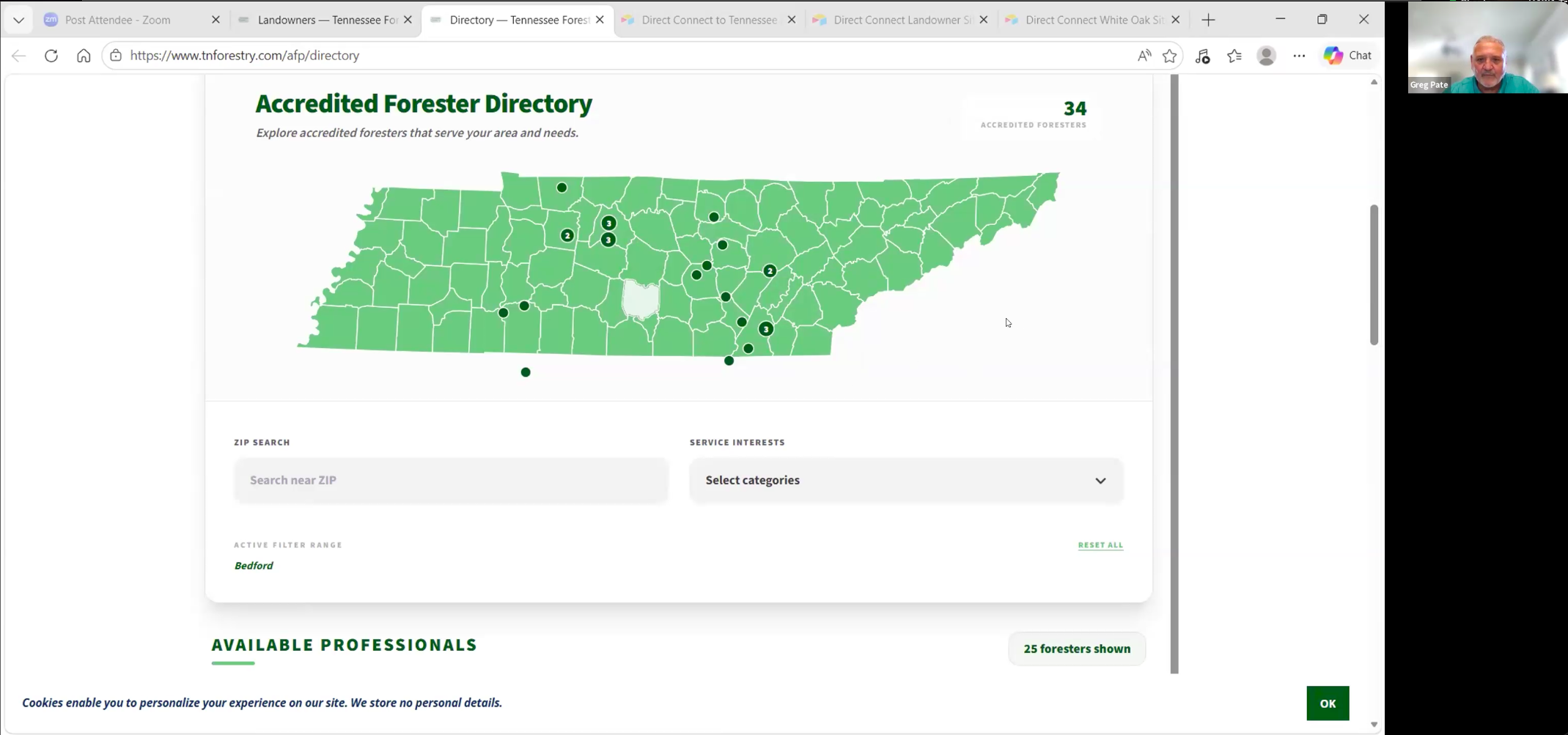
This list is housed on the Tennessee Forestry Association (TFA) website and replaces the consulting forester list on the Tennessee Division of Forestry (TDF) website. It will be widely advertised to encourage accredited foresters to provide forest management services across Tennessee rather than relying on non-accredited individuals.
-
You must pay annual dues ($50 for TFA members/ $175 for non-TFA members), adhere to the Code of Ethics, and retain documentation of credentials in case verification is requested. You must also complete eight hours of continuing education units each year, including one hour of ethics training every two years.
-
Yes, any defendant in an ethical complaint will have the opportunity to respond and present their case before a determination is made.
Opportunities Webinar
Learn more about what TNAFC has to offer by watching our Opportunities Webinar.
Passcode: d39x.a3G
Resources
Partners


